
UNDERGROUND
An exploration of campus life beyond the winter surface. Using an open site in Harbin as a speculative testing ground, Underground imagines a sheltered public landscape where gathering, learning, and everyday activities can continue through the colder months.
Ways of Opening the Ground

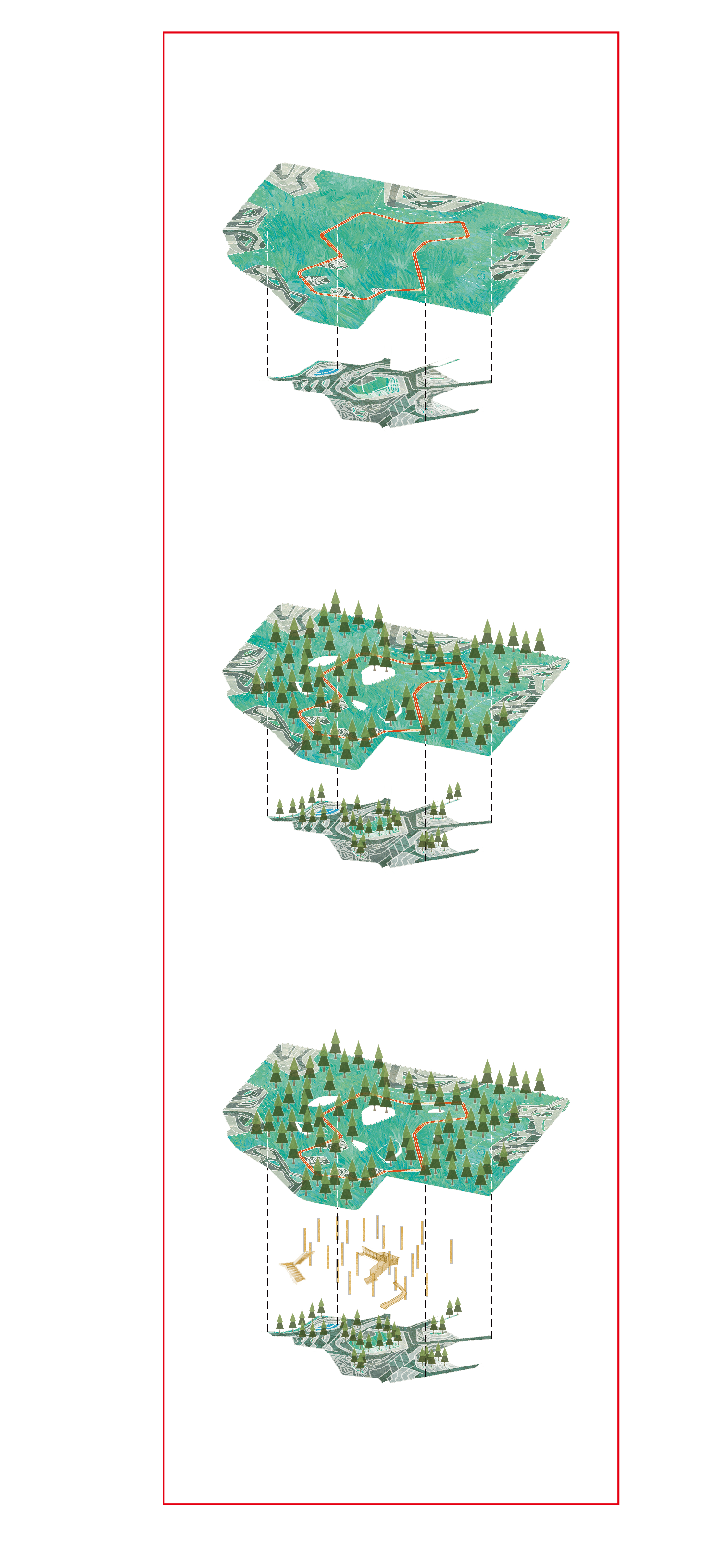
A layered landscape
Surface
Existing and reshaped ground conditions.
Planting
Seasonal vegetation and planting strategies for winter resilience.
Connections
Openings, ramps, circulation, and structural connections between the surface and underground spaces.
Life in section

Spring
New growth and daylight at the openings.
Summer
Planted ground and shaded shared spaces.
Autumn
Seasonal canopy above continuing routes below.
Winter
Sheltered activity beneath snow-covered ground.
Ground and water
Original concept drawings from the study.

Inhabited spaces

Gathering & Performance
A shared landscape for gathering, informal performance, and social activity.
Water & Atmosphere
A space organized around water, light, and connections between above and below.


Learning & Everyday Life
Study and circulation spaces connected through the landscape.
Independent Spatial Design Study · Harbin, China · 2018